A monorail to drive urban development in Ulaanbaatar
23 Apr. 2010 With a steady stream of foreign investors arriving in Mongolia, particularly in UB, following the recent Oyu-Tolgoi mining agreement, many believe it's time to give the city a much-needed makeover.
There is notably a significant lack of public parks, so much so that even in the middle of summer, it's difficult to find even a small patch of greenery. Yet there were once parks in the Mongolian capital, but they have gradually been covered by apartment buildings and shopping malls. The impeccable sidewalks inherited from the Soviet era have since cracked and broken, leaving only piles of stones and earth. Ultimately, we have a bleak and dusty image of the city, giving the impression of having won its independence at the cost of a civil war.
Moreover, a traveler or investor visiting in winter will suffocate in a thick cloud of pollution coming from the ger districts on the city's outskirts, compounded by exhaust fumes from endless traffic.
And if this same person has to walk anywhere, especially at night, they will have to avoid twisting their ankle in a pothole or falling into an open sewer grate. If they manage that, they'll surely have to repeat the ordeal, this time blindly, in one of the many unlit alleyways that abound throughout the city. After such an obstacle course, they might find it difficult to take this place seriously.
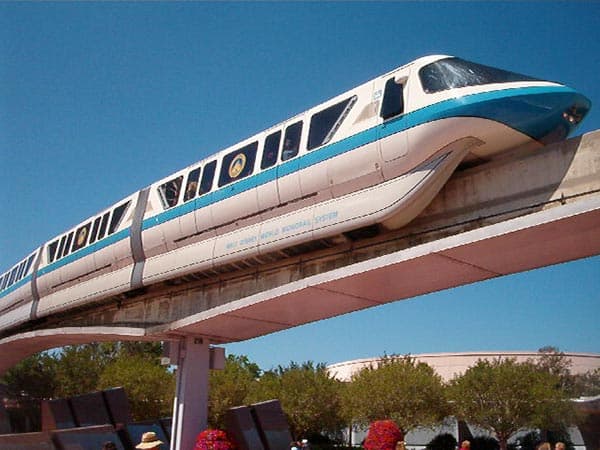
So what to do? Why not opt for a remedy to all these ailments, called the Monorail? A monorail line that would run down Peace Avenue, the city's main artery, before looping back around the downtown center—that should do the trick.
It would be Bombardier Transportation, a company constantly seeking new international opportunities for such projects, that would oversee construction. They have already designed many beautiful monorail systems around the world with comfortable cars for the great pleasure of users.
A monorail costs significantly less than an underground system, which would moreover be nearly impossible to implement due to the current heating system and the hardness of the rocky ground on which the Mongolian capital rests.
The only downside compared to the underground system is that the monorail moves considerably more slowly. But since UB isn't that large, a monorail would be more than sufficient to serve such an area quickly enough. Moreover, this type of above-ground system is an urban feature that would add a certain beauty and modernity to the city.
Operating costs are moreover minimal, and the ticket price, while modest, would eventually make the project profitable.
This would solve parking problems in the downtown center. It would help reduce traffic and congestion, resulting in a significant reduction in pollution. It would also reduce pedestrian circulation, as people would opt for a faster way to get where they want. With sidewalks thus cleared, the city would become more aesthetically pleasing. And it would provide a safe, well-lit, and economical means of transport for the many pedestrians who today must contend with rocky, frozen, and unlit sidewalks.
The city, thus transformed, would project a better image of itself to future foreign investors. They would then prefer to seize any opportunity rather than miss the boat.
Charlène Nomadays
As the original SEO writer at Nomadays, who has evolved into content manager and head of the communications division, Charlène has accompanied the adventure from its inception with passion and loyalty. After spending seven years in Asia—from China to Thailand, passing through Mongolia and South Korea—she has made travel a way of being in the world. A lover of words, nature, and human connection, she endeavors to convey in her texts a sensitive, engaged, and responsible vision of tourism. Each article is for her a bridge between curiosity, respect, and wonder.